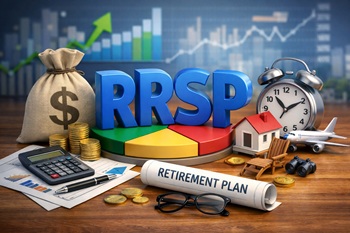
Book your Appointment Now! With the RRSP deadline just around the corner, many Canadians start thinking about last-minute contributions — but an RRSP should be more than just a seasonal tax decision. It’s a powerful financial planning tool that, when used strategically, can help you reduce taxable income today while building long-term retirement security for tomorrow.
An RRSP (Registered Retirement Savings Plan) allows your investments to grow tax-deferred until withdrawal. Contributions can lower your taxable income, which may result in a refund or reduced taxes owing. But the key question isn’t simply “How much should I contribute?” It’s “How does an RRSP fit into my overall financial plan?”
Understanding Your Options Before rushing to meet the deadline, consider:
1. How much contribution room do you have? Unused contribution room carries forward, giving you flexibility if this year isn’t ideal for maximizing your deposit.
2. Should you contribute now or later? If you expect your income to increase in the near future, it might make sense to contribute now but defer claiming the deduction until a higher-income year.
3. What should you invest in inside your RRSP? An RRSP is an account type, not an investment. Within it, you can hold mutual funds, ETFs, GICs, stocks, bonds, and other qualified investments. Your choices should align with your risk tolerance, time horizon, and retirement goals.
4. Are there other strategies to consider? Spousal RRSPs, RRSP loans, or coordinating contributions with a TFSA can all be part of a broader strategy, depending on your circumstances.
It’s About Strategy, Not Just the Deadline The RRSP deadline often creates urgency, but thoughtful planning creates better outcomes. Instead of making a rushed contribution simply to “check the box”, take time to understand how your decision impacts your taxes, retirement income, and overall financial picture.
If you’d like guidance on your options and how they apply to your personal situation, I’m hosting an upcoming session to walk through key options and strategies in a clear, practical way. You’ll leave with a better understanding of what works best for you — and the confidence to take action before the deadline.
Message me for registration details and to reserve your spot. Let’s make this RRSP season a strategic one, not just a rushed one.
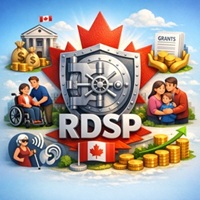
Planning for the future is important for everyone, but individuals living with disabilities and their families often face unique financial challenges. The Registered Disability Savings Plan (RDSP) was created by the Government of Canada to help eligible individuals with disabilities build long-term financial security while providing access to valuable government assistance.
At JK Asset Management, we believe financial education is the first step toward making informed decisions. Understanding how an RDSP works can help families explore opportunities to create a stronger financial foundation for the future.
What Is a Registered Disability Savings Plan?
A Registered Disability Savings Plan (RDSP) is a long-term savings plan designed to help individuals with disabilities save for their future. Similar to other registered accounts, an RDSP allows investments to grow tax-deferred, meaning taxes are not paid on investment growth until funds are withdrawn.
The purpose of an RDSP is to provide financial support for the long-term needs of a person with a disability while helping families take advantage of government contributions that may significantly increase the value of the plan.
Who Can Open an RDSP?
To qualify for an RDSP, an individual must generally:
Be eligible for the Disability Tax Credit (DTC)
Have a valid Social Insurance Number (SIN)
Be a resident of Canada when the plan is opened
Be under the age of 60 when contributions are made
An RDSP can be opened by the beneficiary themselves or, depending on the situation, by a parent, legal representative, or other qualifying individual.
How Does an RDSP Work?
An RDSP combines personal savings with potential government incentives to help maximize long-term growth.
There are three main components:
Personal Contributions
Family members, friends, or the beneficiary can contribute money to an RDSP. Contributions are not tax-deductible, but the funds can be invested within the plan and grow tax-deferred.
There is a lifetime contribution limit of $200,000 per beneficiary.
Canada Disability Savings Grant (CDSG)
The Government of Canada may provide matching contributions through the Canada Disability Savings Grant.
Depending on family income and contribution amounts, the government may match contributions at different rates. Over a beneficiary’s lifetime, the CDSG can provide up to $70,000 in additional funds.
This makes an RDSP a powerful tool for families who want to maximize their savings potential.
Canada Disability Savings Bond (CDSB)
For eligible individuals with lower family incomes, the Government of Canada may contribute a Canada Disability Savings Bond without requiring personal contributions.
The CDSB can provide up to $20,000 over the beneficiary’s lifetime, helping individuals who may have limited ability to contribute themselves.
The Benefits of an RDSP
Long-Term Financial Security
An RDSP can help create a financial resource to support future needs, including:
Living expenses
Medical costs
Education and training
Housing needs
Quality-of-life expenses
Government Support
One of the greatest advantages of an RDSP is the ability to receive government contributions, allowing families to grow savings faster than through personal contributions alone.
Tax-Deferred Growth
Investments held inside an RDSP can grow without immediate taxation, allowing the savings to compound over time.
Financial Independence
An RDSP can provide individuals with disabilities greater financial independence and additional resources to support their personal goals.
Understanding Withdrawals
RDSPs are designed as long-term savings vehicles. When funds are withdrawn, payments generally consist of a combination of personal contributions, investment growth, and government contributions.
Because government grants and bonds have specific holding requirements, withdrawing funds too early may result in some government contributions being repaid.
For this reason, RDSP planning should consider both current needs and long-term objectives.
RDSP Planning Considerations
Every individual’s situation is different. Before opening an RDSP, it is important to consider:
Eligibility for the Disability Tax Credit
Current and future financial needs
Contribution opportunities
Investment choices
Timing of withdrawals
Coordination with other government benefits
A thoughtful plan can help ensure the RDSP works effectively as part of a broader financial strategy.
How JK Asset Management Can Help
At JK Asset Management, our role is to provide education and guidance so families can better understand their options and make informed financial decisions. We help clients explore how an RDSP may fit into their overall financial plan, including savings goals, investments, retirement planning, and long-term financial security.
Our approach is focused on understanding your unique circumstances and helping you create a strategy designed around your family’s needs.
Start Planning for the Future Today
An RDSP can be an important tool for helping Canadians with disabilities build financial security and independence. With government incentives, tax-deferred growth, and long-term planning opportunities, it may provide meaningful support for the future.
If you or a family member may benefit from an RDSP, consider speaking with a financial professional to understand your options and determine how this plan may fit into your overall financial strategy.
At JK Asset Management, we believe every family deserves the opportunity to build a stronger financial future—because no family should be left behind.