Many of the most important financial decisions we make in life happen after we leave school—but few of us are taught how to manage money, build wealth, protect our families, or plan for the future. Understanding finances is a lifelong skill, yet many Canadians are left to figure it out on their own.
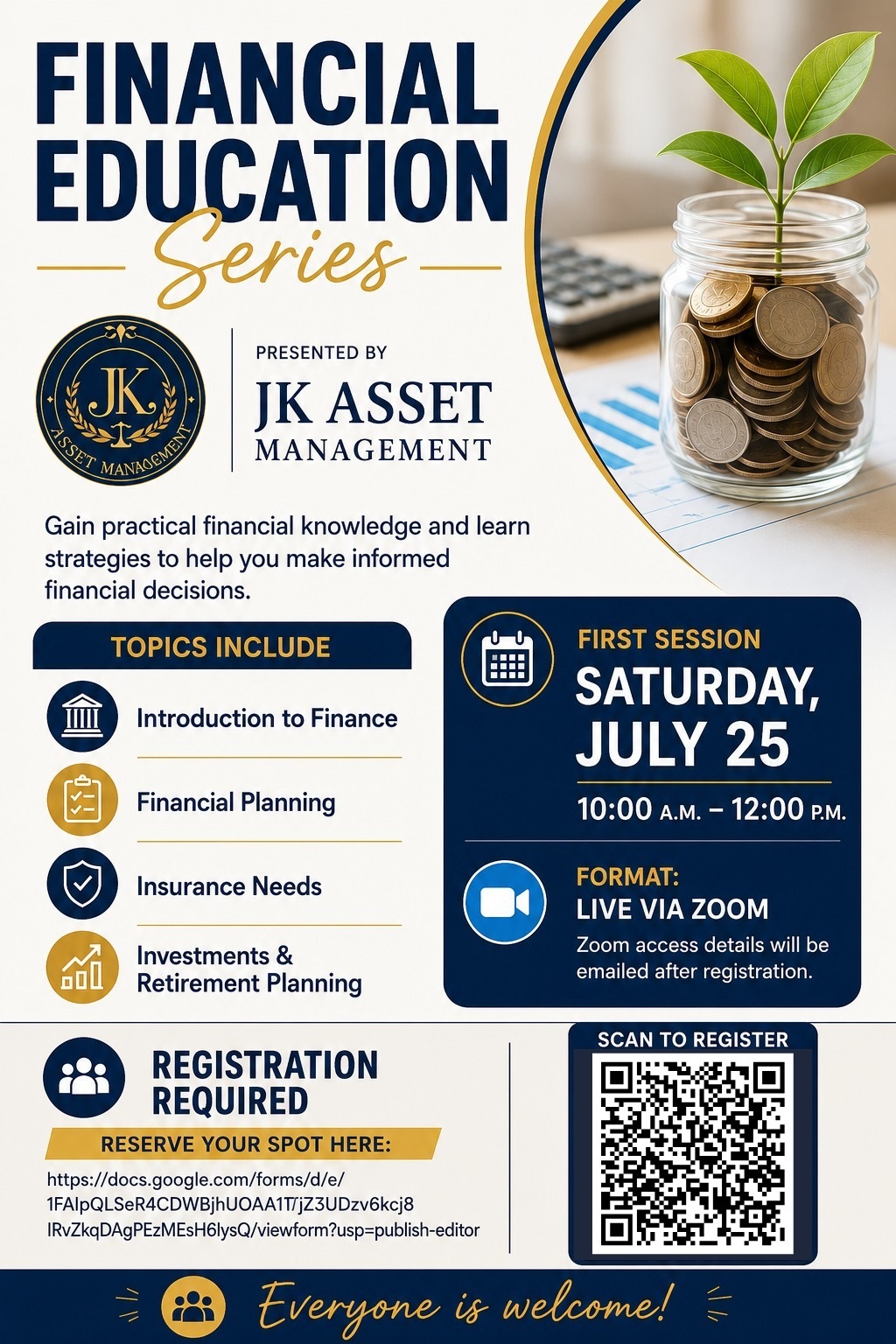
At JK Asset Management, we believe financial education is the foundation for making confident and informed decisions. Our Financial Education Series: The Education They Didn’t Teach in School is designed to help individuals and families understand the key principles of personal finance and take control of their financial future.
Through practical discussions and easy-to-understand concepts, we explore important topics such as:
Building a Strong Financial Foundation – Understanding budgeting, cash flow, saving strategies, and managing debt.
Insurance and Financial Protection – Learning how insurance can help protect your income, family, and financial goals.
Investing for the Future – Understanding investment options, risk management, and the importance of starting early.
Retirement Planning – Exploring how to create a plan that helps provide financial security and independence during retirement.
Estate Planning and Legacy Building – Understanding how to protect your assets and prepare for future generations.
Financial education is not about how much money you make—it is about understanding how to make the most of the money you have. Whether you are just starting your financial journey, raising a family, preparing for retirement, or looking to improve your financial knowledge, having the right information can make a meaningful difference.
The decisions you make today can impact your financial future for years to come. By gaining knowledge and understanding your options, you can move from uncertainty to confidence and create a stronger foundation for yourself and your family.
Join JK Asset Management as we bring financial education to our community—because the financial lessons that matter most are often the ones they never taught us in school.
Retirement Planning: Building Your Financial Future
Why Retirement Planning Matters
Retirement planning is about creating financial freedom to enjoy life after your working years. Whether your goal is to travel, spend more time with family, pursue hobbies, or simply enjoy peace of mind, having a well-designed retirement plan helps turn those goals into reality.
Many Canadians are concerned about whether they will have enough money to retire comfortably or whether their savings will last throughout retirement. Starting early, understanding your options, and reviewing your plan regularly can help reduce these concerns and provide greater confidence about the future.
Benefits of Planning for Retirement
Financial Security
Building retirement savings over time helps ensure you have the income needed to cover everyday living expenses, healthcare costs, travel, and other lifestyle goals.
Financial Independence
A well-structured retirement plan allows you to maintain your desired lifestyle without relying on family members or government programs alone.
Peace of Mind
Knowing you have a plan in place allows you to focus on enjoying life instead of worrying about your finances.
Flexibility
The earlier you begin planning, the more choices you’ll have regarding when you retire and how you want to live during retirement.
The Foundation of a Retirement Plan
Assess Your Current Financial Situation
A successful retirement plan begins with understanding where you are today. This includes reviewing:
Current income
Monthly expenses
Savings and investments
Outstanding debts
Existing pension plans
Retirement goals
Having a clear picture of your finances makes it easier to identify opportunities and create a realistic retirement strategy.
Set Clear Retirement Goals
Consider the lifestyle you want during retirement.
Ask yourself:
At what age would I like to retire?
Will I continue working part-time?
Do I plan to travel?
Where do I want to live?
How much income will I need each month?
What legacy would I like to leave for my family?
Your answers will help determine how much you should save and how your investments should be managed.
Understanding Your Sources of Retirement Income
Most Canadians rely on several sources of retirement income rather than a single pension.
Government Benefits
Government programs provide an important foundation for retirement income, including:
Canada Pension Plan (CPP)
Old Age Security (OAS)
Guaranteed Income Supplement (GIS), for those who qualify
These benefits can provide reliable lifetime income but are generally designed to supplement—not replace—your employment income.
Workplace Pension Plans
Many employers offer pension plans that provide additional retirement income. Depending on the plan, your retirement benefit may be based on:
Years of service
Salary history
Employer and employee contributions
Investment performance
Understanding your workplace pension helps you estimate your future retirement income.
Personal Savings
Personal savings play a significant role in achieving retirement goals. Common savings vehicles include:
Registered Retirement Savings Plans (RRSPs)
Tax-Free Savings Accounts (TFSAs)
Non-registered investment accounts
Even modest, consistent contributions can grow significantly over time through the power of compound growth.
Building an Investment Strategy
Your investment strategy should reflect your:
Retirement timeline
Risk tolerance
Income needs
Financial objectives
A diversified investment portfolio can help balance growth opportunities while managing risk.
As retirement approaches, many investors gradually shift toward investments designed to provide greater stability and dependable income.
Managing Debt Before Retirement
Reducing debt before retirement can improve financial flexibility and reduce monthly expenses.
Consider reviewing:
Mortgage balances
Credit card debt
Personal loans
Lines of credit
Lower debt levels often mean less retirement income is required to maintain your lifestyle.
Common Retirement Concerns
Will My Money Last?
One of the biggest concerns Canadians face is outliving their retirement savings. A comprehensive retirement income strategy can help provide sustainable income throughout retirement.
Am I Saving Enough?
Many people are unsure whether they’re contributing enough toward retirement. Regular reviews can help ensure your savings remain aligned with your goals.
When Can I Retire?
Retirement depends on more than age. Factors such as savings, expected expenses, pensions, and investment income all contribute to determining when retirement is financially achievable.
Inflation
Over time, the cost-of-living increases. A retirement plan should consider inflation so your purchasing power can be maintained throughout retirement.
Steps to Build Your Retirement Plan
Evaluate your current financial position.
Define your retirement goals and desired lifestyle.
Estimate your future retirement income needs.
Review government benefits and workplace pensions.
Build a regular savings and investment plan.
Develop an investment strategy suited to your goals.
Reduce outstanding debt where possible.
Review your retirement plan annually and adjust as your circumstances change.
The Value of Professional Guidance
Retirement planning is not a one-time event—it is an ongoing process. As your career, family situation, income, and financial goals evolve, your retirement strategy should evolve as well.
Working with a financial professional can help you:
Understand your retirement income options
Maximize available tax advantages
Coordinate pensions, investments, and government benefits
Develop strategies to reduce financial risk
Stay on track toward your long-term objectives
Final Thoughts
Retirement should be a time to enjoy the life you’ve worked hard to build. The earlier you begin planning, the greater your opportunity to accumulate wealth, make informed financial decisions, and create lasting financial security.
No matter where you are in your financial journey, taking the first step today can make a meaningful difference in your future. A thoughtful retirement plan can provide confidence, flexibility, and the freedom to focus on what matters most during your retirement years.
Book your Appointment Now! With the RRSP deadline just around the corner, many Canadians start thinking about last-minute contributions — but an RRSP should be more than just a seasonal tax decision. It’s a powerful financial planning tool that, when used strategically, can help you reduce taxable income today while building long-term retirement security for tomorrow.
An RRSP (Registered Retirement Savings Plan) allows your investments to grow tax-deferred until withdrawal. Contributions can lower your taxable income, which may result in a refund or reduced taxes owing. But the key question isn’t simply “How much should I contribute?” It’s “How does an RRSP fit into my overall financial plan?”
Understanding Your Options Before rushing to meet the deadline, consider:
1. How much contribution room do you have? Unused contribution room carries forward, giving you flexibility if this year isn’t ideal for maximizing your deposit.
2. Should you contribute now or later? If you expect your income to increase in the near future, it might make sense to contribute now but defer claiming the deduction until a higher-income year.
3. What should you invest in inside your RRSP? An RRSP is an account type, not an investment. Within it, you can hold mutual funds, ETFs, GICs, stocks, bonds, and other qualified investments. Your choices should align with your risk tolerance, time horizon, and retirement goals.
4. Are there other strategies to consider? Spousal RRSPs, RRSP loans, or coordinating contributions with a TFSA can all be part of a broader strategy, depending on your circumstances.
It’s About Strategy, Not Just the Deadline The RRSP deadline often creates urgency, but thoughtful planning creates better outcomes. Instead of making a rushed contribution simply to “check the box”, take time to understand how your decision impacts your taxes, retirement income, and overall financial picture.
If you’d like guidance on your options and how they apply to your personal situation, I’m hosting an upcoming session to walk through key options and strategies in a clear, practical way. You’ll leave with a better understanding of what works best for you — and the confidence to take action before the deadline.
Message me for registration details and to reserve your spot. Let’s make this RRSP season a strategic one, not just a rushed one.
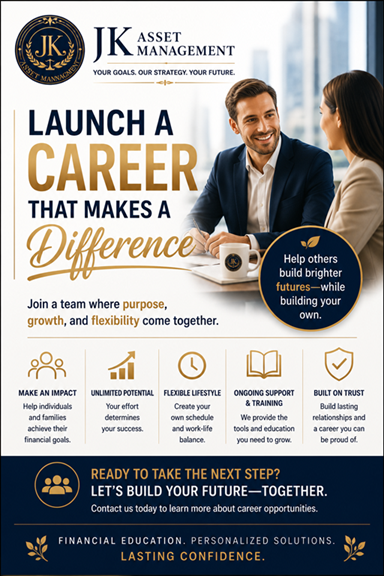
Become a Financial Advisor with JK Asset Management
At JK Asset Management, our mission is simple: No Family Left Behind. We believe every Canadian deserves access to quality financial education and professional guidance, regardless of their income or net worth. Whether a client is investing $50 or managing a seven-figure portfolio, everyone deserves the opportunity to build a stronger financial future.
We’re currently seeking motivated, ethical, and people-focused individuals across Canada who are interested in building a rewarding career as a Financial Advisor.
Why Join JK Asset Management?
Make a Meaningful Impact
Help individuals and families improve their financial well-being through education, planning, and personalized financial strategies.
Flexible Career Path
Begin on a part-time basis while maintaining your current employment or other commitments. Build your business at a pace that works for you.
Comprehensive Training & Mentorship
No previous experience in financial services is required. We provide:
Weekly training sessions
Wednesday evening business presentations
Saturday morning education classes
One-on-one coaching and mentorship
Ongoing professional development
Our experienced advisors will support you throughout your licensing and career journey.
Learn at Your Own Pace
Most new advisors complete their licensing requirements within 3 weeks to 6 months, depending on their schedule and commitment. The licensing course requires approximately 40 hours of study.
Opportunity for Growth
Your career progression is based on your effort, leadership, and commitment—not on seniority, background, or previous experience.
Is This Career Right for You?
We’re looking for individuals who have:
Integrity and strong personal values
A passion for helping others
Excellent communication skills
A desire to learn and grow
A positive attitude and strong work ethic
Whether you’re changing careers, looking for additional income, or seeking greater flexibility, this opportunity may be right for you.
Frequently Asked Questions
Do I Need Experience in Finance?
No.
Many successful advisors began with little or no financial background. We provide the education, tools, systems, and mentorship needed to help you succeed.
Can I Start Part-Time?
Yes.
Many advisors begin part-time while maintaining their current careers. This allows you to gain experience and build confidence before deciding whether to transition into a full-time role.
Is There a Demand?
Absolutely.
Millions of Canadians are looking for guidance with:
Budgeting
Debt management
Insurance planning
Retirement planning
Investing
Education savings
Estate planning
Financial protection
Helping families improve their financial future is both meaningful and rewarding.
What Does It Cost to Get Started?
The initial investment is relatively modest and primarily consists of licensing, registration, and educational requirements. Your licensing course generally requires approximately 40 hours of study, allowing you to qualify at a pace that fits your schedule.
A Diverse and Inclusive Opportunity
JK Asset Management welcomes individuals from all walks of life.
Our team includes professionals from many different industries, cultures, and backgrounds. We believe diversity strengthens our organization and helps us better serve Canadian families.
Many of our advisors are women and individuals from diverse cultural communities who have built successful careers while maintaining flexibility for their families and personal goals.
Career Opportunities Across Canada
We are currently recruiting in:
Alberta
British Columbia
Ontario
Saskatchewan
Manitoba
Atlantic Canada
And other regions across Canada
Wherever you live, we’d be happy to discuss whether this opportunity is available in your province.
Examples of Previous Careers
Many successful advisors have transitioned from careers such as:
Previous Career
Example Achievement*
Forklift Operator
Six-figure annual earnings
Military
High-performing financial advisor
Art Director
Six-figure annual earnings
Government Employee
Successful leadership career
Construction Worker
Six-figure annual earnings
Mortgage Broker
High-producing advisor
Oil Industry Professional
Six-figure annual earnings
Entrepreneur
Successful financial services career
*Individual results vary and depend on many factors, including experience, effort, business skills, market conditions, and time devoted to the business. These examples are not guarantees of future income.
Could This Be the Opportunity You’re Looking For?
This career may be a great fit if you’re interested in:
Helping people achieve financial security
Earning additional income
Building a flexible business
Becoming your own boss
Developing leadership skills
Creating long-term career growth
Making a positive impact in your community
Take the First Step
If you’re ready to learn more about becoming a Financial Advisor with JK Asset Management, we’d love to meet you.
Schedule an introductory interview to learn more about the licensing process, training program, and career opportunities available.
We look forward to helping you explore whether a career in financial services is the right fit for your goals and aspirations.
Important Note: Income in the financial services industry is generally commission-based and varies significantly between individuals. Success depends on many factors, including licensing, effort, skills, market conditions, client relationships, and time devoted to the business. Any income examples are provided for illustrative purposes only and should not be interpreted as typical or guaranteed results.
Planning for the future is important for everyone, but individuals living with disabilities and their families often face unique financial challenges. The Registered Disability Savings Plan (RDSP) was created by the Government of Canada to help eligible individuals with disabilities build long-term financial security while providing access to valuable government assistance.
At JK Asset Management, we believe financial education is the first step toward making informed decisions. Understanding how an RDSP works can help families explore opportunities to create a stronger financial foundation for the future.
What Is a Registered Disability Savings Plan?
A Registered Disability Savings Plan (RDSP) is a long-term savings plan designed to help individuals with disabilities save for their future. Similar to other registered accounts, an RDSP allows investments to grow tax-deferred, meaning taxes are not paid on investment growth until funds are withdrawn.
The purpose of an RDSP is to provide financial support for the long-term needs of a person with a disability while helping families take advantage of government contributions that may significantly increase the value of the plan.
Who Can Open an RDSP?
To qualify for an RDSP, an individual must generally:
Be eligible for the Disability Tax Credit (DTC)
Have a valid Social Insurance Number (SIN)
Be a resident of Canada when the plan is opened
Be under the age of 60 when contributions are made
An RDSP can be opened by the beneficiary themselves or, depending on the situation, by a parent, legal representative, or other qualifying individual.
How Does an RDSP Work?
An RDSP combines personal savings with potential government incentives to help maximize long-term growth.
There are three main components:
Personal Contributions
Family members, friends, or the beneficiary can contribute money to an RDSP. Contributions are not tax-deductible, but the funds can be invested within the plan and grow tax-deferred.
There is a lifetime contribution limit of $200,000 per beneficiary.
Canada Disability Savings Grant (CDSG)
The Government of Canada may provide matching contributions through the Canada Disability Savings Grant.
Depending on family income and contribution amounts, the government may match contributions at different rates. Over a beneficiary’s lifetime, the CDSG can provide up to $70,000 in additional funds.
This makes an RDSP a powerful tool for families who want to maximize their savings potential.
Canada Disability Savings Bond (CDSB)
For eligible individuals with lower family incomes, the Government of Canada may contribute a Canada Disability Savings Bond without requiring personal contributions.
The CDSB can provide up to $20,000 over the beneficiary’s lifetime, helping individuals who may have limited ability to contribute themselves.
The Benefits of an RDSP
Long-Term Financial Security
An RDSP can help create a financial resource to support future needs, including:
Living expenses
Medical costs
Education and training
Housing needs
Quality-of-life expenses
Government Support
One of the greatest advantages of an RDSP is the ability to receive government contributions, allowing families to grow savings faster than through personal contributions alone.
Tax-Deferred Growth
Investments held inside an RDSP can grow without immediate taxation, allowing the savings to compound over time.
Financial Independence
An RDSP can provide individuals with disabilities greater financial independence and additional resources to support their personal goals.
Understanding Withdrawals
RDSPs are designed as long-term savings vehicles. When funds are withdrawn, payments generally consist of a combination of personal contributions, investment growth, and government contributions.
Because government grants and bonds have specific holding requirements, withdrawing funds too early may result in some government contributions being repaid.
For this reason, RDSP planning should consider both current needs and long-term objectives.
RDSP Planning Considerations
Every individual’s situation is different. Before opening an RDSP, it is important to consider:
Eligibility for the Disability Tax Credit
Current and future financial needs
Contribution opportunities
Investment choices
Timing of withdrawals
Coordination with other government benefits
A thoughtful plan can help ensure the RDSP works effectively as part of a broader financial strategy.
How JK Asset Management Can Help
At JK Asset Management, our role is to provide education and guidance so families can better understand their options and make informed financial decisions. We help clients explore how an RDSP may fit into their overall financial plan, including savings goals, investments, retirement planning, and long-term financial security.
Our approach is focused on understanding your unique circumstances and helping you create a strategy designed around your family’s needs.
Start Planning for the Future Today
An RDSP can be an important tool for helping Canadians with disabilities build financial security and independence. With government incentives, tax-deferred growth, and long-term planning opportunities, it may provide meaningful support for the future.
If you or a family member may benefit from an RDSP, consider speaking with a financial professional to understand your options and determine how this plan may fit into your overall financial strategy.
At JK Asset Management, we believe every family deserves the opportunity to build a stronger financial future—because no family should be left behind.